Review for www.nomoreworkhorse.com
Showing posts with label Lou Reed. Show all posts
Tuesday, August 25, 2026
Monday, September 18, 2023
Loaded – The Life (and Afterlife) of The Velvet Underground – Dylan Jones – Book Review
Labels:
Andy Warhol,
book,
Dylan Jones,
John Cale,
Loaded,
Lou Reed,
review,
Velvet Underground
Tuesday, October 19, 2021
The Velvet Underground – Film Review
Labels:
Doug Yule,
film,
John Cale,
Lou Reed,
Moe Tucker,
review,
Sterling Morrison,
Todd Haynes,
Velvet Underground
Saturday, December 28, 2019
Lou Reed - Lou Reed
Lou Reed's debut album, released in 1972, is a strange album. And, let's face it, kind of a failure. After the heights of the Velvet Underground, who across four albums released some innovative and resonant music, this is... well, pedestrian at best. It opens with I Can't Stand It, one of several (at the time) unreleased Velvet Underground songs he chose to record for this album. A big problem here, and across the album is Reed's vocal. It sounds like he was told to 'try and sing', rather than his sing/speak style which suits him so well. The band are ok, but not great at confronting any subtleties.
Some songs here appear to have come from a random Lou Reed song title generator, Going Down, Wild Child, Walk It and Talk It. The last of these sounds like an attempt to ape the Rolling Stones' Brown Sugar and doesn't suit Reed at ALL. Oddest of all is Berlin, reprised for his excellent 1973 album of the same title. Here it sounds very much like 'cocktail party music', a whispered Reed vocal, over pleasant sounding soft rock. It's not bad at all, but again, doesn't really suit Lou Reed. I Love You is a charming little song, and one of the stronger ones here, and it's followed up by Wild Child, which is probably the song that works best on this album.
Worst of all is the final song, Ocean. The band of session players assembled here cannot cope at all with the pacing of this song and smother it in instrumentation, while Reed sings it TERRIBLY. Don't listen to this version, go seek out the Velvet Underground version, found on their collection of outtakes V.U., which is excellent. Overall this is a skippable album in Lou Reed's back catalogue.
Labels:
Berlin,
Going Down,
I Can't Stand It,
I Love You,
Lou Reed,
Ocean,
Velvet Underground,
Wild Child
Friday, September 6, 2019
Friday, November 23, 2018
Looking back to Lou Reed
Article for www.nomoreworkhorse.com
https://nomoreworkhorse.com/2018/11/23/looking-back-to-lou-reed/
Tuesday, July 31, 2018
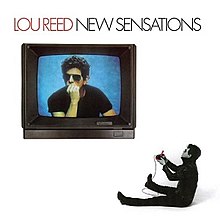
Lou Reed - New Sensations
Like a lot of established serious musicians from the 60s and 70s, the eighties was an awkward decade for Lou Reed. New Sensations, released in 1984 opens with one of the cheesiest, poppiest songs Lou Reed has ever written, I Love You Suzanne. The 'boppiest' song he ever wrote, it has the unforgettable refrain: "Do what you wanna do, do what you can, do what you wanna do say I love you Suzanne". Indeed. It's fair to say on this album, Lou Reed fully embraced 80s pop. And so they follow, Endlessly Jealous, My Red Joystick, throwaway tunes with throwaway lyrics. The Stones-y riffs of Turn to Me are an improvement, the track sounds like a dry run for 1989's acclaimed New York album.
It's left to the title track to provide the strongest moment. A slinky, sparse groove with the merest of guitar touches, it describes a motorcycle trip accompanied by music that appears to evoke the feeling of being on such an adventure.
Elsewhere, Doin' the Things We Want To is fairly decent 80s punch the air rock, even incorporating a saxophone without it jarring. Fly Into the Sun and My Friend George are fairly mellow guitar rock, all clipped guitar chords and rolling basslines. High in the City is pretty close to self-parody with cheesy brass and Down at the Arcade at least has a bit growl to its guitars.
So overall an interesting but not essential Lou Reed album. That cover art (above) is kind of hilarious though.
Thursday, December 26, 2013
Album Review: Lou Reed - Ecstasy
Lou Reed released possibly his last great album, Ecstasy, in 2000. Gone is the gloom of his early 90s work. Opener Paranoia Key of E has a restless guitar driving the song along, and a 'street feel' akin to his New York album.
The bulk of the album however is some rather fine downtempo, reflective tracks. Several of these (Mad, Tatters) feature brass which gives them a little soul, but they are quintessentially, fine exponents of being what they are: Lou Reed songs. Tatters features a tender vocal and lyric, "I know you don't care but here's my last thought", before turning sour "our little thing is lying here in tatters". It's one of many little triumphs on this album.
One of the standout tracks is the title track. A gently pulsing guitar combines with a soaring melody, taken to further heights by a gorgeous Fernando Saunders bass part right at the outtro. Uptempo tracks Mystic Child, Future Farmers of America and Big Sky by contrast feel rushed and throwaway. Reed is better when hé does, as he says a "Modern Dance". It's a kind of poppy rock song with a classic Lou Reed vocal.
On the ballad Turning Time Around, Reed's companion asks "what do you call love?". Reed answers, deadpan: "well I call it Harry.". There's no coming back from this. White Prism prevents the album from sinking completely into wry, couch-sitting musings by injecting heavy guitars and drums yet NOT at the expense of the song, one which knows how dial up and down the intensity at will. A "Rock Minuet" sounds like a truly pompous thing, and so it proves here, though Reed just about gets away with it on an oddly interesting song, thanks in no small part to some excellent guitar work. Baton Rouge follows, a classic strum featuring more humour ("I once had a car, lost it in a divorce, the judge was a woman of course").
The ultimate folly though must be the EIGHTEEN minute Like A Possum which consists of little more than Lou Reed, poet of New York, roaring lines like "Possum shots! Possum runs!" over growling guitars. That's not as good as it sounds. It's followed by brief, palette-cleansing instrumental Rouge. So not necessarily a smooth, cohesive listen, but an album full of well-crafted songs.
Thursday, October 31, 2013
Monday, September 30, 2013
Album Review: Lou Reed - Coney Island Baby
Coney Island Baby was released at the end of 1975, the follow
up to Lou Reed’s aggressively noisy Metal Machine Music. This album couldn’t be further away, his
band, including ex-Velvet Underground bass player Doug Yule, create a warm,
melodic collection of songs.
The lyrical message across this album is of Reed’s blissful
love life. Opening with the chiming
keyboards of Crazy Feeling, the lyrics are peppered with references to his love
interest Rachel (“and you, you really are a queen, oh such a queen”). The strutting, skipping guitars of Charley’s
Girl follow before the guitars add a little bite on a slowed-down version of VU
tune She’s My Best Friend (guess who).
The album takes a sharp left as, unhappy with this gooey
softness, the Lou Reed street persona reappears on Kicks, a murderous tale of getting
thrills from violence (“when the blood comes down his neck, don’t you know it
was way better than s€x”) as snatches of conversation swoop in and out, creating
a most unsettling atmosphere which threatens to completely spoil the mood.
A Gift follows, where Reed sings tongue-in-cheek lyrics
about being “just a gift to the women of this world” over soothing, strummed
guitars and dippy pipes. After two relatively
throwaway songs, the sighing guitars of the title track are a fitting end to the
album. Here Reed recites a possibly
autobiographical (hard to tell though as the man lies constantly) tale from his
childhood of high school days and sports try-outs over a wonderful melody. Some of the lyrics hark back to his edgier
past (“all your two-bit friends, they’ve gone and ripped you off”), culminating
in Reed cooing about the “glory of love…. man, I swear I’d give the whole thing
up for you”. It sounds quite wonderful,
though it’s so far removed from Heroin, Waiting for the Man and Berlin that it’s
hard to take it 100% at face value.
Nonetheless it’s probably the most tuneful Lou Reed album.
Thursday, May 9, 2013
Lou Reed - Set the Twilight Reeling
After the sombre artistic highpoints of New York, Songs for Drella (with John Cale) and Magic and Loss, Lou Reed took 4 years to release follow-up Set the Twilight Reeling in 1996. The album opens with ragged guitars and puerile lyrics ("you scream, I steam, we all want egg cream") on Egg Cream, a track which finishes with his trashiest climax since the noisier moments of The Blue Mask.
He's still able to release classy ballads such as NYC Man and Trade In, which have a breezy, carefree tone, though the latter finishes with some guitar muscle. Elsewhere we get the pounding guitar strum of Finish Line (finishing with a particularly satisfying piano coda) and the old school soul of Hang On To Your Emotions. Sex With Your Parents and Hookywooky are a little too throwaway to convince before the gnarled rock of The Proposition and Adventurer get things back on track.
Later, heavy guitar workout Riptide sees Lou Reed very consciously going for the Hendrix/guitar hero vibe and succeeding on an almost eight minute long guitar assault. The title track is a classic Reed album closer, the acoustic soul ballad ambles along pleasantly before things speed up thrillingly for a final guitar workout.
Friday, September 28, 2012
Album Review: Lou Reed – The Blue Mask
For anyone who
ever wondered how Lou Reed went from his chaotic 70s character to his
professorial late 80s/early 90s character, 1982’s The Blue Mask may reveal the
answers. On this album Reed is playing
the character of husband. It starts
gently with the gentle, middle-aged electric strum of My House. Reed’s guitar combines well with Robert
Quine’s throughout this album, on heavy workouts and also gentler tracks such
as Women which features some really gorgeous instrumental passages.
It has to be
said that the lyrics are a little trite on this album. As a newly-wed (to Sylvia Morales) he
embraces the concept of marriage – “I’ve really got a lucky life, my writing,
my motorcycle and my wife” also “I love women I think they’re great”, neither couplet likely to win a Booker prize.
However the
music is so strong the album succeeds, after the gentle, vaguely threatening
The Gun we get the full-on assault of the title track which sees Reed and
Quine’s guitars go completely into overdrive, rocking like crazy on this track,
Reed barking threatening lyrics like “make the sacrifice, mutilate my face, if
you need someone to kill I’m a man without a will” over feedback squeals. Waves of Fear is in a similarly powerful vein.
But quieter
tracks are more the norm, The Heroine and The Day John Kennedy Died. Not all the tracks work – Average Guy is far
too repetitive and banal (“I’m just your average guy trying to do what’s
right”), while although Heavenly Arms has a decent melody, lyrically it’s
cringeworthy, the chorus merely features the name Sylvia sung over and over. However these tracks don’t detract from what
is one of Reed’s stronger albums.
Labels:
Blue Mask,
Day John Kennedy Died,
Gun,
Heroine,
Lou Reed,
My House,
review,
Robert Quine,
Sylvia Morales,
Wces of Fear,
Women
Saturday, August 11, 2012
Album Review: Lou Reed & John Cale – Songs for Drella
Lou Reed was on a particularly strong creative streak in the
late 80s/early 90s, and in 1990 he teamed up with fellow ex-Velvets’ John Cale
to record a tribute to the late Andy Warhol.
Reed had developed a subtle, deft guitar playing style which really
works on this album the second of three real classics from this period (1989’s
New York and 1992’s Magic and Loss also).
The keyboard-based Open House is wonderfully warm piece of
music, as is the Cale-sung Style It Takes.
The second of these is a particularly beautiful piece of music, mainly
keyboards but with great guitar touches from Lou Reed. Supposedly John Cale had to be talked into
singing the line “this is a rock group called the Velvet Underground... they
have a style that grates”.
Many of the songs are intelligent and original, without
being up their own behinds. Trouble with
Classicists is an interesting musing on classicists, impressionists and
personalities, while Faces and Names considers how easy it would be “if we all
looked the same, and we all had the same name” how much easier things would be.
The album takes you through Warhol’s life, from his early
days in America (Smalltown, Open House) to his shooting (Slip Away, I Believe)
to his final, lonely days (A Dream, Forever Changed). Nobody But You, an almost Leonard
Cohen-style track muses about surviving his shooting by Valerie Solanas (“I’m
still not sure I didn’t die”) and concludes devastatingly that “all my life...
it’s been NOBODIES like you”.
The six-minute spoken word of A Dream is almost light
relief. The track is recited by John
Cale, who can make a mundane passage sound very strange as the protagonist
(Warhol) talks about Cale (“he’s been looking really great... what does it mean
if you give up drinking and you’re still so mean”) and Reed (“I’m so mad at
him, Lou Reed got married and didn’t invite me... I hate Lou, I really do”).
The album ends splendidly, penultimate track Forever Changed
has almost frantic piano under Reed’s streetwise guitar riffs while Cale
laments how (Warhol) is “forever changed”.
The tender final track Hello It’s Me sees Lou Reed take the lead role as
he directly addresses the deceased Warhol, lamenting his treatment of him (“I
wished I’d talked to you more when you were alive) praising his vision (“I
haven’t heard ideas like that in such a long long time”) but allowing himself a
final sidewipe (“your diaries are not a worthy epitaph”).
Even without the words and knowledge of the subject there is
fine music here. Often overshadowed by
its predecessor, this is a fine album in its own right.
Wednesday, November 2, 2011
Album Review: Lou Reed & Metallica | Lulu
Labels:
Brandenburg Gate,
Frank Wedekind,
Iced Honey,
Junior Dad,
Lou Reed,
Lulu,
Metallica,
Mistress Dread,
Pumping Blood,
review,
View
Wednesday, June 15, 2011
Album Review: Lou Reed – Magic and Loss

Following the well received New York and Songs for Drella, Lou Reed had returned to form and expectations were high in 1992. When Magic and Loss came out, dealing primarily with death, it felt like a culmination of a life’s work. The album is quite imposing, with each song having a subtitle as well as a title, eg Cremation – Ashes to Ashes, and with (for the most part) very muted downbeat music.
Despite a rather pompous opening instrumental, Dorita, the album quickly settles into a highly melodic groove, albeit a somewhat dark and gloomy one. What’s Good is as perky as it gets, with Lou musing on cancer and loss. Power and Glory gets more specific, talking about “isotopes introduced into his lungs” and “cancer reduce him to dust” leading into a wonderful chorus owned by a guest appearance from Little Jimmy Scott.
Lou and fellow guitarist Mike Rathke’s guitar playing is very restrained throughout this album, nowhere more so than on the dark plea for escape that is Magician (“I’m afraid that if I go to sleep I’ll never wake, I’ll no longer exist”). Some levity cracks through the darkness, in Goodby Mass he muses “you, you would have made a joke, you would have said something like tomorrow I’m smoke.”
Later, Harry’s Circumcision details a botched attempt at altering one’s own features over a floating melody. There are faster rockier tracks here Warrior King, Gassed and Stoked but these don’t work quite as well, and are at odds with Reed’s almost professorial vocal delivery.
The title track is another dark, muted melody about “passing through the fire to the light” with a real sense of finality about it, and fittingly, it’s the last track. The album is a dark, at times overwhelming, even claustrophobic collection of music. Yet it is also warm and soothing and will resonate with fans of Lou Reed’s music.
Labels:
Goodby Mass,
Lou Reed,
Magic and Loss,
Magician,
Mike Rathke,
Power and Glory,
review,
What's Good
Monday, July 26, 2010
Are there any really consistent bands?
In an age of intangible music formats, X-factor here-today-gone-tomorrow clowns, more so-called indie bands than you can shake a stick at, not to mention every second older band reforming, today’s music scene is arguably more transient than ever before.In the supposed ‘golden age’ of rock, there were consistent acts like the Rolling Stones, Neil Young and David Bowie to name just 3 who had a superb string of albums (especially the last 2) and seemed untouchable. Until the crap one came along.
In the case of the Rolling Stones, this arrived in 1980 with Emotional Rescue, which took some of the disco beat experiments and Jagger falsettoisms from their previous album, the not-too-bad-at-all Some Girls, and fleshed them into a basis for an album. The impact of this was to render them unable to subsequently release any more than 2 more tracks of musical merit, the following years’ Start Me Up and the excellent Waiting On A Friend. And they still haven’t gone away you know.
Neil Young’s case is less straightforward. After a string of almost flawless albums from 1970’s After the Goldrush to 1979’s Rust Never Sleeps, 1981 saw the release of the pretty uninspiring Re-ac-tor (featuring the 9 minute repetitive yawn-fest T-Bone). Since then his solo career has not been totally merit-free (Freedom, Harvest Moon and Silver and Gold all had their moments), though it never scaled the heights of the 1970s.
Similarly with the aforementioned David Bowie. He bestrode the 70s like a colossus, with some brilliant albums (Hunky Dory, Aladdin Sane, Low), some very good ones (Ziggy Stardust) and some critically acclaimed (though overrated) ones (Diamond Dogs, Station to Station, Heroes). He inspired punk, post-punk and even the new Romantics, and invented Berlin as a cool destination for making music. So he could have defined 80s mainstream music. Unfortunately he let it define him. Let’s Dance was the start of it. Commercial as hell, aside from the title track it featured a terribly sanitised version of China Girl, which he wrote for Iggy Pop in 1977, which set the benchmark for the remainder of the decade. He released cheesy albums like Tonight and Never Let Me Down, before forming the noisy and tedious Tin Machine. Since then, he has been less relevant, releasing a series of albums in divergent musical styles, none of which has been awful but few with any really high quality tracks.
I can’t claim ownership of any of the above as I was too young for them in their prime. So what of the next generations of bands. Are there any who have managed a string of consistent albums, without any let downs?
Definitely out of the reckoning: Morrissey (Kill Uncle, Maladjusted, Years of Refusal), Mark Eitzel (despite the quality of the American Music Club albums, his solo albums are generally pretty patchy), The Cure (should never have been allowed release anything after 1989), Jesus and Mary Chain (ditto except fast forward to 1994). Also out would be Sonic Youth - too many dodgy noise experiments, key piece of evidence being their collaboration with Mats Gustafsson, Hidros 3, which consists of little more than noise and some particularly nasty groaning from Kim Gordon.
The Lemonheads released a pretty awful covers album last year (Varshons), and Primal Shame are really just a bunch of chancers. And Lurid (Lou Reed) had the same problem in the 1980s as Bowie and Neil Young. As for the grunge scene, Pearl Jam didn’t keep their initial momentum going, in fact they deliberately pulled back, while Soundgarden were all well and good but I don’t know if Chris Cornell’s credibility will ever recover from last year’s Timbaland-produced Scream.
Arab Strap were a candidate, though I was reminded that they were off the boil sometimes, and had too many albums that sounded the same. And the problem with Ryan Adams, apart from the awful Rock N Roll, was the media attention he received turned him into a pain in the neck really, which manifested itself in some of his music, of which he released too much to even approach consistency.
REM is an interesting one. 1994’s Monster is probably the most bought REM album. What I mean is that, with their critical stock at an all-time high after Automatic for the People, everybody wanted Monster. What an aptly named album though, within months you could pick this up easily in any second-hand music shop (of which there used to be plenty in the mid-90s). They haven’t released anything of note since. But imagine Michael Stipe had died after Automatic for the People, he would be deemed way more important than Kurt Cobain. There were rumours about his health at this time. Thankfully he is alive and well, though if a hypothetical premature death had occurred I’d say he’d have been revered, almost deified.
As for the possibles, the first band that occurred to me was the National. Although the first album wasn’t really anything special, subsequent albums have been way better. Though perhaps it’s them remaking the same album, just better each time? Radiohead would probably be the most obvious candidate, though it’s hard to make a case for Hail to the Thief as a truly enjoyable album. Nick Cave probably counts as one but he’s just so goddamn unloveable really, I can never get truly moved by him. He seems incapable of getting bad reviews though.
Mark Kozelek is probably an example of this, ever since his Red House Painting days, and perhaps Mark Lanegan would count too, no serious mis-steps (in my opinion). Tindersticks would also be one, though it’s probably just for my ears really. Richmond Fontaine are discounted as they don’t really make much impact, and I actually prefer Willy Vlautin’s books, I’d argue that’s where his true talent lies.
The problem is that many bands just make the same album over and over (often with diminishing returns), does that make them consistent? All feedback welcome!
Labels:
David Bowie,
greatness,
Lou Reed,
Morrissey,
Neil Young,
Nick Cave,
Pearl Jam,
Primal Scream,
Radiohead,
REM,
Rolling Stones,
Ryan Adams,
Sonic Youth,
The Cure
Monday, January 11, 2010
Album Review: The Velvet Underground

The Velvet Underground’s 3rd album is an underrated gem. After the intensity of their first 2, it’s a much lower-key experience. The artwork is predominantly black with a cool-looking black and white photo. It creeps quietly into the room with the opening track Candy Says, which is sung by Doug Yule who replaced John Cale in the band. The playing on this and most of the rest of the album is spare and simple. On the face of it, it’s a quiet poppy album, but there are moments when things are just a little off (a little guitar distortion here and there) which makes the album a little messed-up, in a good way.
The pace picks up a bit with What Goes On which jumps along nicely, Lou Reed taking vocal duties and a great guitar solo. In fact, the guitar all over this album is really good and blends in well with the quietly sung vocals. Some Kinda Love has a bit of swagger to it before 2 very quiet songs – Pale Blue Eyes and Jesus (even quieter). If there is any kind of slow anthem on this album, Pale Blue Eyes is it. It has probably the most conventional structure here, with a proper verse and chorus. Jesus is the quietest song on here, and is a kind of odd song with lyrics like “Jesus, help me find my proper place”.
The album is thrown in a different direction by the more propulsive Beginning to See the Light, which features quick-strummed guitars and some fairly unhinged vocals from Reed. It’s followed by 2 more quietish songs, I’m Set Free and That’s the Story of My Life. These, like most of the rest feature some really clean-sounding jangly guitar, quite influential on the jangly guitar bands of the 1980s.
The second last track, The Murder Mystery is a departure. Featuring more words in it than the previous 8 tracks combined, sonically it’s also quite different. If anything it harks back to Cale-era VU, with a torrent of lyrics cascading through each side of the stereo (try it with headphones, different lyrics left and right!). It sounds more eerie than the rest of the album, with ghostly-sounding guitars and thrilling stops and starts. The ending of this track is a little disappointing, with a seemingly random piano playing accompanied by yet more random lyrics. It’s not like anything else I’ve heard, that’s for sure.
Unfortunately I really don’t enjoy the closing track, After Hours, which features drummer Mo Tucker on cloying vocals. The whole tune is to my ears a little cheesy.
Overall the rest of the album is great, it’s one of those albums I dig out every so often and never get tired of it. Each time I listen to it, a little more of it reveals itself. Although it’s overshadowed by its 2 predecessors, this album endures and does not suffer with age (was released in 1968!). It's very much an album to sit and listen to in a room rather than a party album.
Friday, December 4, 2009
Review of the Decade - Part 3: The truly strange
In 2000, Mark Kozelek broke a near on 4 year silence to put out a 7 song mini-album, Rock n Roll Singer, which featured 3 ACDC songs done in his own stripped down acoustic style. Not content with that, the following year he put out a whole album of ACDC songs, What’s Next to the Moon. He proved himself to be the king of cover versions in the ‘noughties’ as in 2005 he released an album of Modest Mouse covers (Tiny Cities) under his Sun Kil Moon bandname.
Mark Eitzel went from returning from a 3 year silence with an album of electronica (2001’s Invisible Man) to a dreadful album of covers (2002’s Music for Courage and Confidence), then an album of his songs recorded with a Greek orchestra (2003’s Ugly American), reformed American Music Club in 2004 as mentioned earlier, returned to electronica on 2005’s Candy Ass (terrible title), brought out another band album in 2008 and finally nailed electronica on 2009’s Klamath.
Lou Reed recorded an album of spoken word and songs based on Edgar Allan Poe – The Raven, which was available as a single or double album.
David Sylvian left melodic pop behind with his ‘difficult’ solo albums Blemish and Manafon, though his collaborative Nine Horses project was a little more accessible.
Mark Eitzel went from returning from a 3 year silence with an album of electronica (2001’s Invisible Man) to a dreadful album of covers (2002’s Music for Courage and Confidence), then an album of his songs recorded with a Greek orchestra (2003’s Ugly American), reformed American Music Club in 2004 as mentioned earlier, returned to electronica on 2005’s Candy Ass (terrible title), brought out another band album in 2008 and finally nailed electronica on 2009’s Klamath.
Lou Reed recorded an album of spoken word and songs based on Edgar Allan Poe – The Raven, which was available as a single or double album.
David Sylvian left melodic pop behind with his ‘difficult’ solo albums Blemish and Manafon, though his collaborative Nine Horses project was a little more accessible.
Monday, October 26, 2009
Album Review: The Go-Betweens - The Friends of Rachel Worth

This is the first of the Go-Betweens reunion albums. Released in 2000, it finds Robert Forster and Grant McLennan (RIP) backed by the band Sleater-Kinney, who I am not really familiar with.
The material is generally mellower than their 80s material but it does contain some trademark jangly guitars and some very wistful numbers. Grant was always the poppier songwriter, and so it follows here, the album opening with his Magic in Here. Anchored by a brittle yet beautifully constructed riff, it ambles along nicely before leading into Robert's wonderful Spirit. It has a simple but utterly addictive guitar figure powering this mellow, elder-statesman like song. The flamboyant Robert Forster persona of yore has been replaced by a world-weary, wistful storyteller, and it suits him well.
2 more uptempo tracks follow, where the guitars have been beefed up a little, particularly on German Farmhouse, which is a Lou Reed-like rocker talking of his years of seclusion(!).
Most of the rest of the material is mellower though in general more downbeat than their previous material. It still contains 'sunshine', though it's more like winter sun breaking over a frosty landscape.
It's a very pleasant listen which should appeal to fans of the band and any new listeners wondering if they should check them out. Yes you should.
The material is generally mellower than their 80s material but it does contain some trademark jangly guitars and some very wistful numbers. Grant was always the poppier songwriter, and so it follows here, the album opening with his Magic in Here. Anchored by a brittle yet beautifully constructed riff, it ambles along nicely before leading into Robert's wonderful Spirit. It has a simple but utterly addictive guitar figure powering this mellow, elder-statesman like song. The flamboyant Robert Forster persona of yore has been replaced by a world-weary, wistful storyteller, and it suits him well.
2 more uptempo tracks follow, where the guitars have been beefed up a little, particularly on German Farmhouse, which is a Lou Reed-like rocker talking of his years of seclusion(!).
Most of the rest of the material is mellower though in general more downbeat than their previous material. It still contains 'sunshine', though it's more like winter sun breaking over a frosty landscape.
It's a very pleasant listen which should appeal to fans of the band and any new listeners wondering if they should check them out. Yes you should.
Labels:
Friends,
Go-Betweens,
Grant McLennan,
Lou Reed,
Rachel,
review,
Robert Forster,
Sleater-Kinney,
Worth
Subscribe to:
Posts (Atom)


.jpg)